
Before setting any goal, ask yourself:
“How do I want to feel when this is done?”
Do you want to feel calm? In control? Proud? Light? This question taps into the emotional root of your goal, which is one of the strongest motivators for ADHD brains.
When a goal connects to a feeling, it gains personal meaning. That meaning becomes fuel on the days when motivation naturally dips.
How These ADHD Goal Setting Apps Fit With Your Planner
Planner = structure + visual clarity
Apps = nudges + accountability + focus
Here’s a quick pairing guide:
- Struggle to start tasks? Use Tiimo for planning and Focus To-Do for timed sprints.
- Too many tasks? Prioritise in Todoist and motivate with Habitica.
- Phone distraction? Use Forest and time your work bursts with Focus To-Do.
- Want long-term habit building? Use Habitica for habits and Daylio for awareness and mood patterns.
Sample ADHD-Friendly “Daily Goal Planner”

You can adapt this to anything—studying, cleaning, writing, or even errands. You can also download a goal kit pdf from this link.
Use Seasonal Goals—Not Stressful Year-Long Ones
ADHD motivation fades if the finish line is too distant. That’s why seasonal (3-month) or monthly goals work beautifully.
Shorter goals help you:
- Stay motivated
- Review progress regularly
- Adjust quickly
- Avoid burnout
- Keep the system fresh
Pair your seasonal goal with weekly planning and daily micro-steps—it keeps everything manageable.
Break Every ADHD Goal Setting Into Baby Steps
Here’s the golden ADHD rule:
If a task feels overwhelming, it’s too big. Shrink it.
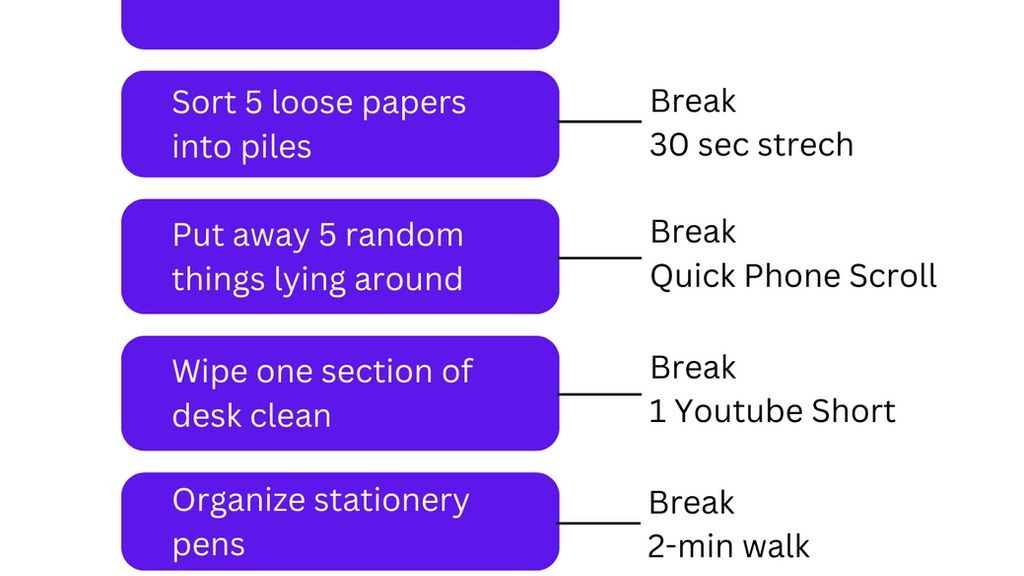
Examples of micro-actions:
- Clear 5 items
- Sort 3 papers
- Send 1 email
- Write 1 paragraph
- Clean one shelf
- Study for 10 minutes
These tiny steps activate your brain because they’re quick wins that create immediate dopamine rewards.
Build a Simple Resilience Plan
Life will interrupt you—ADHD or not. Instead of giving up on the whole day, use a fallback system.
Your resilience plan should include:
- Common obstacles (fatigue, low motivation, unexpected events)
- Tiny backup actions Example: “If I can’t clean the room, I will at least clear 3 items.”
- Minimums that feel effortless Not “finish the project” but “write for 5 minutes.”
Your brain needs options, not shame.
Add Accountability + Novelty
ADHD brains respond beautifully to external motivation and fresh stimulation.
Try:
- A friend or partner checking in
- Working alongside someone (body-doubling)
- Colour-coded planner layouts
- Stickers for completed tasks
- Weekly theme challenges
- Rotating rewards
- Time-based “quests” (like in Habitica)
These tiny shifts make planning fun instead of boring.
Stay Flexible—Zero Guilt
Here’s something to tattoo onto your mind:
Skipping days doesn’t mean failure. Returning is success.
This is why undated planners work so well—no wasted pages, no guilt.
Good planning for ADHD requires:
- Flexibility
- Experimentation
- Rest
- Resets
- Compassion
You’re not a machine—you’re a human with a brain that works differently. Your system should honour that.
Combine H.A.R.D. Goals and ADHD Planning for Maximum Impact
Here’s the full picture:
| Strategy | What It Does for ADHD Brains |
| Heartfelt | Connects tasks to emotion — real motivation. |
| Animated | Creates a visual picture of success — keeps focus alive. |
| Required | Adds urgency and clarity — no vague deadlines. |
| Difficult (just enough) | Keeps interest without overwhelming you. |
| Daily/Weekly Planner | Externalises memory, reduces chaos. |
| Micro-steps + Rewards | Dopamine hits = momentum. |
This is the combo that works consistently.
Final Thoughts for ADHD Goal Setting: Your Planner Is Your Sidekick
ADHD isn’t a character flaw. It’s a different operating mode—and when your goals match that mode, productivity stops being a fight and starts becoming flow.
A good planner helps you:
- Visualise what matters
- Break big things into small wins
- Track progress
- Create order from chaos
- Stay consistent
- Build momentum gently
Pick one goal that truly matters. Choose a planner (or app) that feels like a fit. Break your next step into the smallest possible action. And more importantly, be kind to yourself.
Momentum is built one tiny step at a time.
Understanding ADHD and Its Impact on Daily Life
ADHD can significantly affect daily life. Individuals may struggle with focus, organisation, and time management. These challenges can lead to frustration and feelings of inadequacy. However, understanding ADHD is the first step toward managing its effects.
Recognising Symptoms
Common symptoms of ADHD include:
- Difficulty sustaining attention
- Impulsivity
- Disorganisation
- Forgetfulness
Recognising these symptoms can help in developing strategies to cope effectively.
The Importance of Support Systems
Support systems play a crucial role in managing ADHD. Friends, family, and professionals can provide encouragement and accountability. Engaging with a community can also foster understanding and shared experiences.
Implementing Strategies for Success
Implementing effective strategies can lead to success in managing ADHD. These may include:
- Establishing routines
- Using reminders and alerts
- Setting realistic goals
- Seeking professional help when needed
By adopting these strategies, individuals can create a more structured and supportive environment that enhances their daily functioning.
Conclusion
In conclusion, understanding and managing ADHD is essential for improving quality of life. By recognising symptoms, building support systems, and implementing effective strategies, individuals can navigate the challenges of ADHD more successfully.